Saturday, 2 July 2011

White-winged Black Tern - Saltholme RSPB - 1st July 2011

After a very tough day I was just about to relax and chill out when I got a text that alerted me to a White-winged Black Tern at Saltholme RSPB in Teesside. So after having my tea I headed on down and was no site for about 08.10. It was a lovely evening; still, calm, and not a breath of wind. I began to search and after about 5 minutes drew a blank. I didn't fancy dipping this bird after the day I had, would just add insult to injury!

So a lad who was standing next to me picked it up at the other side of the road on Saltholme East. The bird performed well if not a little distant. I had Long-eared Owl and White-winged Black Tern flying in the same scope view at one point, I doubt that event will ever be repeated again! The bird perched up on two occasions on a post on Saltholme East but as can be expected the wonderful enraged Common Terns saw it off pretty quick!

 (White-winged Black Tern - © Ian Forrest)

(White-winged Black Tern - © Ian Forrest)

Also present was a Bar-headed Goose and Roseate Tern, didn't see the Roseate Tern but I am not to concerned. Still time for them yet.

(Bar-headed Goose - Andrew Kinghorn)


(Bar-headed Goose - Andrew Kinghorn)

Bar-headed Goose....where's my pencil and British bird list? ;)

Until next time, Foghorn out!

Saturday, 25 June 2011

Grand day out

You know when you run out of blog titles from time to time; its one of those times. It was good to get out and do some birding in Durham. That's the place where the Garden of Eden used to be if you are unsure where I mean.

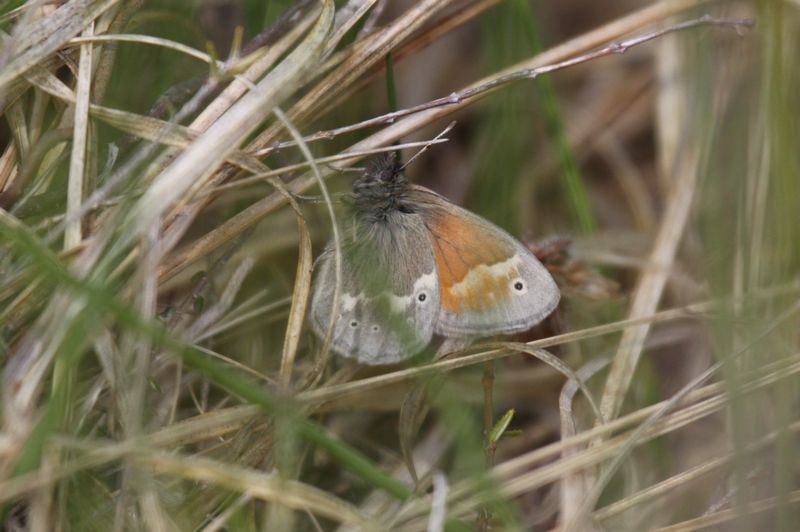
The first port of call was Cowpen Bewley Woodland Park down at Teesside. Meadow Brown, Small Heath, Small Skipper, Speckled Wood, Small Tortoiseshell, Small White, Large White, Ringlet and Common Blue were all noted. Small Skipper and Ringlet were new butterflies for me and I had excellent views and managed some photos. Oh to be new to butterflies!

 (Common Blue - Andrew Kinghorn)

 (Ringlet - Andrew Kinghorn)

 (Ringlet - Andrew Kinghorn)

 (Small Skipper - Andrew Kinghorn)


 (Small Tortoiseshell- Andrew Kinghorn)

After Cowpen Bewley Woodland Park a move was made onto Dorman's Pool where Spoonbill was showing well but distantly. I have become a little bit complacent about these brilliant birds recently, not good! Super birds. It proved that the site was to windy for the hoped for Grayling butterfly. However it is still fairly early and therefore it is highly likely the species isn't out yet. 

We then went to Wingate Quarry where we had Marbled White (which showed exceptionally well!!), Small Tortoiseshell, Ringlet, and Meadow Brown.

(Small Heath - Andrew Kinghorn)


(Marbled White - Andrew Kinghorn)

The last port of call was Bishop Middleham where we had brilliant views of a 1st summer Hobby which flew in after about an hour and a half wait. Also we had 2 summer plumaged Black-necked Grebe and on leaving a Green Sandpiper. Butterflies of note included Small White and Small Tortoiseshell. 

What a truly superb day!

Until next time, Foghorn out!

Monday, 20 June 2011

White winger - No its not a gull.

I put out a plea on BirdForum mid last week and it was answered by Alan Whitehead AKA Duffbirder; see here. We agreed we would go on Saturday and then we checked the weather forecast and it wasn't so good! So we put it back to Sunday. So at about 5.45 on Sunday morning I rose and got ready for when Alan was coming to pick me up. It wasn't soon until we were in Northumberland and picking up another mate; Alan. Confused? You should be! So the 3 of us headed for the long journey north to Aberdeen. Thankfully the company was excellent and the journey seemed to go by really quick!

We arrived on site at Murcar Links Golf Course where the bird had been showing offshore. We were feeling quite relaxed having known the bird was seen this morning on our way up. The bird is undergoing a moult so we were fairly sure it wasn't going to go anywhere anytime soon. When we arrived out hearts sunk when we looked around and saw half the entire worlds population of Common Scoter offshore about 6.2 miles out. They might not have even been in British waters.Thankfuly there was a flock that was fairly close and we set on scanning those. We didn't draw a complete blank as we saw a cracking drake Surf Scoter but not the hoped for White-winged Scoter. The scoters moved a bit south and so did we. But as we arrived the birds were flushed by someone on a quad bike on the beach. Me and Northumberland Alan just laughed in disbelief and how the people of Aberdeen were almost set on making sure we didn't see the bird. Another 2 or so hours passed by and all we had to show for our efforts were at least 2 cracking drake Surf Scoters which were nice but no White-winged Scoter. Then it happened; by "it" I mean the event where someone shouted "I've got it!!!!!!".

Que the usual panics from the rest of us "Where?" and the usual replies "Back left of the flock" etc. I wished someone had said on the sea as I would have said "Here was me looking on the golf course!". On a serious note after the first guy had it he did give very good directions. Very soon after I said "Yeah......i've got it", every eye in the crowd looked at me and then back through their scopes. It soon disappeared out of my view, this was getting frustrating. We all remained calm and then after a short while I found it again and managed some brilliant if a little distant views of this cracking bird! Once you got your eye on it its surprising distinctive to ID and keep your eye on:
- Beware of the field guides which show a well defined marking under the eye as this is hard to see in this bird from some angles.
- The pinkish ring around the bill near the tip is obvious and makes the bird fairly easy to separate from Velvet Scoters present.
- The bird in good light is very dark chocolate brown like that of the colouration of female velvet scoter which it was associating with.

(White-winged Scoter - used by permission - © Matthew Deans)

We did have the bird flapping its wings but even at rest and when preening the white bar across the secondary featherers could be seen. Overall the bird is quite distinctive and sticks out quite nicely from the crowd once you've got your eye in. But I wouldn't know what it was if I had found it so well done to the finder for flagging it down! I would like to think I could pick a bird like this up if I saw one again in the UK while out birding if I ever get chance. What a super bird! Oh and I saw Guillemot which was a year tick.......I don't seawatch much away from Autumn!

Brilliant day, brilliant and educational bird, loving British birding as always. 2 more to official 300 BOU but this bird represents my 301st lifer in the UK.

Until next time, Foghorn out!

Sunday, 12 June 2011

You'll Go Monster Mad For The Honey Buzzards

See how I changed that to avoid copyright issues with these guys.

Saturday I went with 2 mates to North Yorkshire and we had a couple of target species we wanted to see. Our first stop was for the Honey Buzzards at Wykeham Forest in North Yorkshire. We arrived at the vantage point overlooking the forest and a Honey Buzzard was already on show! It took us about 5 minutes but eventually we managed to pick it up. Just in time as well as minutes later it started to do its fascinating display flight. I have never seen anything quite like it. They remind me of a massive day loving Nightjar when they do the display flight; they clap their carpals against each other a few times in succession whilst slightly loosing height at the same time. They do this whilst flying fairly fast paced making it a truly amazing spectacle to observe. We enjoyed spectacular views of what we think was at least 2 males and 1 female. On no less than 3 occasions we had the male overhead. On 1 occasion he was right over my head and on another occasion we actually watched him look down with both eyes at the crowd! I can safely say these were the best views of Honey Buzzard I have ever had and the first decent views of adults I have ever had aswell.

 (Honey Buzzard - © Adam Williams)

 (Honey Buzzard - © Adam Williams)

(Honey Buzzard - © Adam Williams)

We headed off and just as we did it started to rain slightly but it wasn't to heavy and we joined a mini crowd standing and listening to Turtle Doves calling. We had at least 2 birds; one flew off right and it was a poor view. However one of the bird we had sitting in the top of a pine tree not obstructed for a couple of seconds. Turtle Doves are super birds and what a nice bonus!

From here it was a short 30 or so minute drive to a reserve called Fen Bog in the heather moorland of North Yorkshire. Our hopes of Hen Harrier were a bit more than low (none) but we weren't after that species, we had 2 targets; Whinchat and Large Heath butterfly. The butterfly is quite rare and Fen Bog is known as a good spot to see them. First we had a look around for some suitable vegetation and this was when we had a cracking Whinchat. Not a bird I see a lot of as they are a rare breeder in Durham and the well known site is about a 4 mile walk each way over heather moorland with no pathways. We then had to wait for the train to go past, I tried hard not to look so not to be accused of being a birdwatcher and a train spotter. But I love the engineering behind steam engines and the trains themselves so I stood back and admired as it went past with its passengers aboard. There was a break in the cloud and for about 15 minutes we had a break in the weather and we have lovely warm sunshine. So we checked an area of suitable habitat, we found 1, then 2, then we stopped counting! We must have had at least 4 Large Heaths and we had good views as we managed to see 2 of them on deck to study the underwing. Also we had 1 Small Pearl-bordered Fritillary and had my first chance to study the underwing of this species aswell; it showed well and sat still for a long time allowing us to enjoy it.

(Whinchat - © Adam Williams)

(Large Heath- © Adam Williams)

(Small Pearl-bordered Fritillary - © Adam Williams)

A stop off at Saltholme RSPB gave one of my mates his first Spoonbills of the year with 3 showing well feeding. We then headed home but before I got home we had a Hobby fly across the A19 near Elwick in Durham! Superb! A county year tick and always a great bird to see in Durham. I hope this species continues to spread and become more prominent in Durham.

(Spoonbills- © Adam Williams)

A truly fantastic and memorable day with the highlights being the Honey Buzzards displaying and the Hobby.

Until next time, Foghorn out!